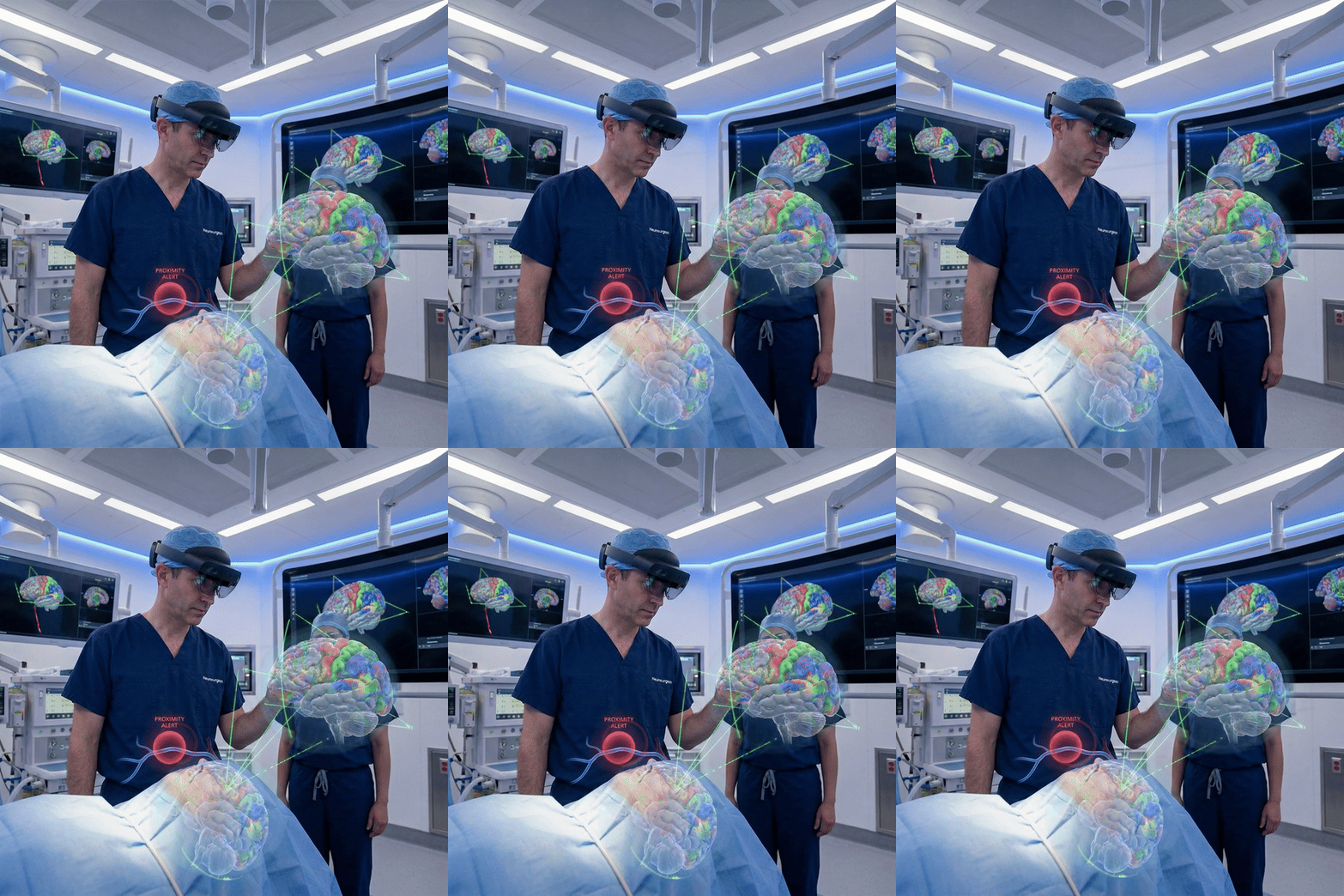
The Mixed Reality Operating Room. Where Digital Intelligence Enters the Surgical Field.
The operating room is where information becomes action. Neurospace XR OR Space brings patient-specific imaging, surgical planning, collaboration, and procedural context into the surgeon’s working environment through Mixed Reality and spatial computing—without separating clinical judgment from the person making the decision.
Critical information should support the field—not compete with it.
Modern neurosurgery can depend on information distributed across planning workstations, PACS viewers, neuronavigation displays, functional data, procedural notes, and remote expertise. XR OR Space is designed to reduce that fragmentation by placing selected context where it is needed, while preserving existing monitors, navigation systems, and standard clinical workflow.
Attention Fragmentation
When relevant information is separated across multiple displays, the surgeon may repeatedly shift visual attention away from the operative field. Mixed Reality creates another way to access context without pretending the physical room disappears.
Data Without Spatial Context
Imaging, tractography, targets, trajectories, and planning data are most useful when their relationship to patient-specific anatomy remains clear. XR OR Space carries the plan forward as spatially organized clinical context.
Expertise Outside the Room
Complex cases may benefit from expertise located elsewhere. Through Neurospace Teleportal, shared case views, annotations, and procedural guidance can become part of a connected clinical workspace rather than a generic video call.
WORKFLOW
02 / FROM PLAN TO FIELD
One patient-specific case. Four connected states.
XR OR Space is not a separate visualization demo. It is the operating-room expression of the Neurospace case—designed to carry selected planning intelligence forward into the intraoperative environment.
CASE CONTINUITYPATIENT-SPECIFIC WORKSPACE
PLANNING STATE
Build the spatial logic before entering the OR.
Multimodal data can be organized into a patient-specific plan so the intraoperative view begins with clinical intent rather than disconnected images.
MRICTfMRIDTISegmentationTractography
OUTPUT: patient-specific anatomy + surgical plan
REGISTRATION STATE
Preserve the relationship between the plan and the operative context.
Where compatible integration exists, Neurospace can reference existing navigation and registration workflows so Mixed Reality remains connected to the clinical coordinate system instead of acting as a free-floating visual.
OUTPUT: spatially contextualized surgical information
SURGICAL VIEW STATE
Show only what is useful in the surgeon’s field of view.
Anatomy, targets, trajectories, and selected procedural information can be surfaced as restrained Mixed Reality layers. The goal is readable context—not a wall of holographic UI.
Extend the same case to expertise outside the room.
Teleportal can connect the surgical workspace to remote specialists, planning teams, and authorized observers so shared annotations and discussion remain anchored to the same patient-specific case.
The digital layer belongs to the headset viewpoint.
Neurospace Mixed Reality is designed as a clinician-specific visual layer. It does not rely on magical holograms floating openly in the room. Physical displays remain physical; spatial overlays appear through the Mixed Reality view and can be shared separately when collaboration requires it.
XR SURGICAL FIELD● MIXED REALITY ACTIVE
Spatial Anatomy
Trajectory Guidance
Teleportal Linked
Surgical View Live
CONTEXT
04 / PATIENT-SPECIFIC SPATIAL CONTEXT
The value is not the headset. It is the clinical information placed inside it.
XR OR Space can organize several categories of patient-specific information into one spatial workflow. Each layer remains traceable to the underlying case data and should be displayed according to the needs of the procedure.
Structural Anatomy
Patient-specific structures derived from MRI and CT, including segmented anatomy and surgical regions of interest.
Functional Context
fMRI, DTI, tractography, and other functional information can be carried into the spatial case when clinically relevant.
Targets & Trajectories
Planned approaches, targets, corridors, and reference geometry can remain visible as controlled procedural context.
Navigation Context
When integrated with compatible systems, the XR layer can reference existing registration and neuronavigation workflows rather than replacing them.
Procedure Information
Selected notes, checkpoints, imaging views, and case-specific information can be surfaced without turning the field into a generic dashboard.
JUDGMENT
05 / HUMAN EXPERTISE + ARTIFICIAL INSIGHT
Human in command.
XR OR Space can surface AI-assisted planning information, pattern recognition, multimodal synthesis, simulation, and proximity context—but the system is designed to support the surgeon’s judgment, not substitute for it.
Technology does not replace expertise. It allows expertise to see further.
Planning Assistance
Help organize imaging, structures, targets, and case-specific planning information before it reaches the operating room.
Context Prioritization
Support the selection of clinically relevant information so the spatial view remains focused on the current task.
Proximity Awareness
Display planning-derived relationships between trajectories and structures of interest as decision-support context where appropriate.
Simulation & Replay
Use the patient-specific case for procedural rehearsal, teaching, review, and recorded visual briefings without claiming autonomous execution.
CONNECTED
06 / TELEPORTAL IN THE OPERATING ROOM
Expertise can enter the case without entering the room.
Through Neurospace Teleportal, XR OR can extend a shared patient-specific case to remote specialists, planning teams, trainees, and partner institutions. The objective is shared clinical presence around the same spatial information—not another video-conference window.
TELEPORTAL — SHARED CASE SESSION● MULTI-SITE LINK ACTIVE
XR ORPRIMARY SURGICAL SITE
REMOTE EXPERTCONSULTATION
PLANNING TEAMCASE REVIEW
TRAINEEOBSERVATION
COLLABORATORSPATIAL ANNOTATION
INTEGRATE
07 / INTEROPERABILITY
Meet the OR where it is.
XR OR Space should extend existing clinical infrastructure, not require a hospital to discard it. The platform is designed around common imaging and planning standards, patient-specific data, and integration points with established surgical technologies.
Mixed Reality becomes valuable when it is the visible end of a connected workflow—not an isolated headset application.
Bring multimodal imaging and patient-specific planning information into a unified Neurospace case through standards-based workflows where supported.
02 / CONNECT
Reference Existing Surgical Systems
Coordinate XR workflows with compatible navigation, planning, and hospital systems instead of presenting Mixed Reality as a replacement for validated tools.
03 / DELIVER
Surface the Right Layer at the Right Time
Make selected spatial information available to the headset wearer while preserving conventional displays and established intraoperative workflows.
04 / SHARE
Extend the Case Through Teleportal
Support remote consultation, collaborative planning, observation, annotation, and education from the same patient-specific workspace.
SCENARIOS
08 / CLINICAL SCENARIOS
Different procedures. One spatial foundation.
The exact XR workflow should be configured around the procedure, available integrations, and institutional practice. These examples illustrate where patient-specific spatial context can be useful without implying autonomous surgical control.
CRANIAL NEUROSURGERY
Approach, anatomy, and corridor context
Bring selected patient-specific structures and planning geometry into the surgical view to support orientation around the planned approach.
Segmented anatomy
Targets and approach corridors
Vessels and structures of interest
Remote case consultation
FUNCTIONAL NEUROSURGERY
Targets, pathways, and planning relationships
Extend functional–anatomical planning into an immersive workspace for preoperative rehearsal, case discussion, and compatible intraoperative reference.
DBS target context
DTI / tractography relationships
Trajectory visualization
Collaborative planning
EDUCATION + OBSERVATION
Teach from the same patient-specific case
Use recorded or live spatial sessions to help trainees understand anatomy, planning logic, procedural sequence, and the relationship between imaging and the operative field.
Immersive observation
Spatial annotation
Recording and replay
Remote lecture integration
REALISM
09 / MIXED REALITY REALISM
One room. Different legitimate views.
XR OR Space keeps the physical and digital layers logically separated. Select a viewpoint below to see what each participant should actually experience.
PHYSICAL ENVIRONMENT
No magical holograms in open space.
The operating room remains a real clinical environment. Staff without Mixed Reality hardware see the patient, instruments, equipment, and physical displays—not floating anatomy projected into the room.
Physical monitors can continue displaying imaging and procedural data normally. XR is an additional clinician-specific interface, not a replacement for every screen in the room.
MIXED REALITY VIEWPOINT
Spatial information appears inside the wearer’s view.
Through Microsoft HoloLens 2 or another appropriate Mixed Reality device, the clinician can access selected patient-specific anatomy, trajectories, targets, and procedural context spatially within the working environment.
The interface should remain restrained, readable, and task-specific. The presence of XR does not transfer clinical authority from the surgeon to the software.
TELEPORTAL VIEWPOINT
The case can be shared without pretending distance disappears physically.
An authorized remote specialist can participate through a shared digital case, receive selected operative or spatial views, discuss the plan, and contribute annotations or guidance according to the connected workflow.
Remote collaboration should preserve clear roles, explicit communication, institutional permissions, and the surgeon’s control of the local procedure.
NEUROSPACE™ | XR OR SPACE
Bring the plan into the field.
XR OR connects patient-specific planning, spatial visualization, collaboration, and education inside one clinically grounded Mixed Reality environment—built to extend the surgeon’s view, not replace the surgeon’s judgment.